
How AI-Powered Data Analytics Is Transforming Claims Risk Detection and Smarter Business Decisions
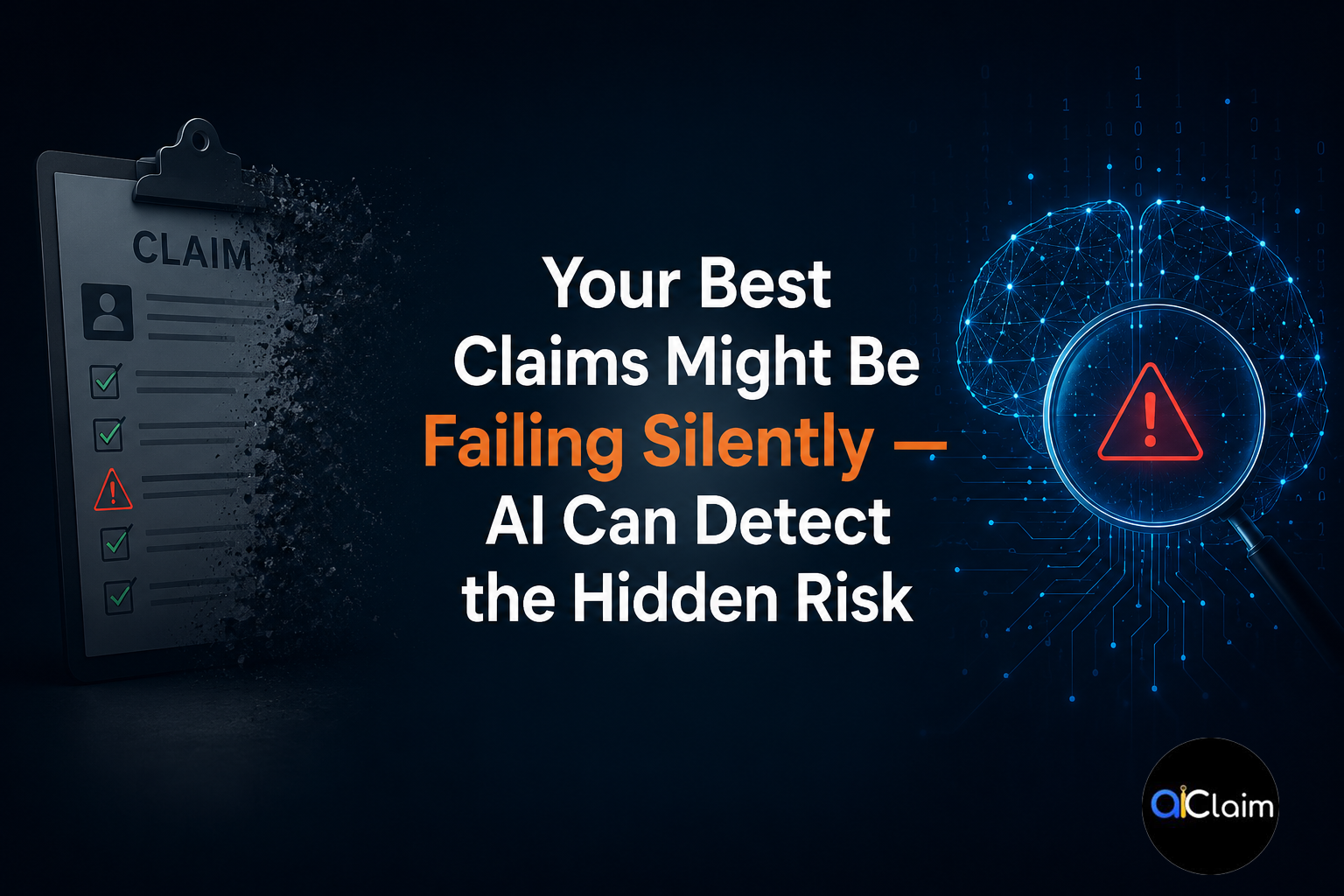
Every organization believes its strongest claims, highest-value customers, and most profitable processes are working exactly as expected. However, many businesses are discovering a hidden problem: some of their most valuable claims are quietly becoming revenue risks before anyone notices.
A claim may look normal on the surface. It may pass initial checks, follow standard workflows, and appear ready for reimbursement. Yet behind the scenes, small warning signs can indicate future denials, payment delays, compliance issues, or financial leakage.
This is where traditional claims monitoring systems often struggle.
Most businesses still depend on historical reports, manual reviews, and rule-based alerts. Unfortunately, these methods usually identify problems only after the damage has already happened. By that time, teams are forced to investigate rejected claims, recover lost revenue, and spend countless hours correcting preventable errors.
Today, artificial intelligence is changing this approach.
With AI-powered claims analytics, organizations can analyze thousands of data points in real time, identify hidden patterns, predict potential risks, and recommend actions before claims fail.
Instead of asking, “Why did this claim fail?” companies can now ask, “What can we do to prevent this claim from failing?”
That shift is creating a new era of smarter claims management.
The Hidden Problem: Why Good Claims Fail Without Warning
A successful claims process depends on multiple connected factors. Although a claim may appear accurate, several hidden variables influence whether it will actually get approved.
For example, a healthcare claim might include correct patient information, accurate coding, and complete documentation. However, subtle issues such as payer behavior changes, historical denial patterns, documentation gaps, or coding inconsistencies can increase rejection probability.
Similarly, insurance companies may face risks from claims that appear legitimate but contain unusual patterns that are difficult for traditional systems to detect.
The challenge is not a lack of data.
In reality, organizations have more data than ever before.
The real challenge is understanding that data quickly enough to make better decisions.
Traditional analytics often provide historical insights. They explain what happened last month or last quarter. However, modern businesses need predictive intelligence that explains what is likely to happen next.
This is where AI-driven data analytics creates a competitive advantage.
Why Traditional Claims Analytics Is No Longer Enough
For many years, companies relied on dashboards, spreadsheets, and predefined rules to manage claims performance.
Although these tools are still useful, they have limitations.
Rule-based systems only recognize problems they have already been programmed to identify. Therefore, when new risk patterns appear, these systems often fail to detect them.
For example, a healthcare organization may have a rule stating that missing documentation causes claim rejection. However, the system may not understand that a specific combination of provider behavior, payer changes, and coding patterns creates a higher denial probability.
AI models approach this differently.
Instead of following only fixed instructions, AI analyzes relationships between millions of data points. It learns from previous outcomes and identifies patterns that humans may overlook.
As a result, businesses gain a proactive approach to claims management.
How AI Detects Hidden Claim Risks Before Revenue Loss Happens
AI-powered claims analytics works by combining multiple intelligent technologies.
Machine learning models analyze historical claims data to understand patterns behind approvals, delays, and denials.
Natural language processing helps AI systems understand unstructured information such as medical notes, customer communications, policy documents, and claim descriptions.
Predictive analytics evaluates current claims and estimates future outcomes based on learned patterns.
Together, these technologies create a smarter risk detection system.
Instead of simply reviewing claims after submission, AI continuously evaluates risk signals.
For example, an AI system may detect that a particular claim has:
- Similar characteristics to previously denied claims
- Missing supporting information
- Unusual billing patterns
- Increased payer rejection probability
- Inconsistent documentation signals
The system can then alert teams before submission or payment processing.
This prevents avoidable revenue loss.
The Role of AI Models in Smarter Business Decisions
Modern AI models are not only designed to automate tasks. They are designed to support better decisions.
Large language models, predictive machine learning algorithms, and advanced analytics engines can work together to create a complete claims intelligence platform.
A modern AI claims solution can analyze:
Historical claim outcomes
Customer and provider behavior
Payment trends
Denial reasons
Operational workflows
Regulatory updates
Payer-specific patterns
Because of this broader analysis, businesses can move beyond basic reporting.
They can understand why specific risks appear and what actions can reduce them.
This creates measurable improvements in efficiency, accuracy, and revenue protection.
Real-Time Data Analytics: Turning Information Into Action
Data alone does not create value.
The real value comes when organizations can transform data into immediate action.
Real-time AI analytics allows businesses to monitor claims continuously rather than waiting for monthly performance reviews.
For example, if a sudden increase in denial probability appears for a specific claim category, AI can immediately identify the trend.
The organization can then investigate the reason and adjust its process.
Consequently, companies reduce unnecessary losses and improve operational performance.
This approach is especially important in industries where small mistakes create significant financial impact.
Healthcare providers, insurance companies, and financial organizations are increasingly using AI analytics because every delayed or rejected claim affects revenue, customer satisfaction, and business growth.
AI-Powered Risk Prediction: The Future of Claims Management
The future of claims management is moving from reactive correction to proactive prevention.
Previously, businesses spent most of their resources fixing failed claims.
Now, AI enables them to prevent those failures before they happen.
Predictive AI models evaluate risk probability and provide actionable recommendations.
For example:
A claim with a high rejection probability can be reviewed earlier.
A documentation issue can be corrected before submission.
A suspicious pattern can be escalated for investigation.
A workflow bottleneck can be optimized automatically.
Therefore, organizations can protect revenue while improving customer experience.
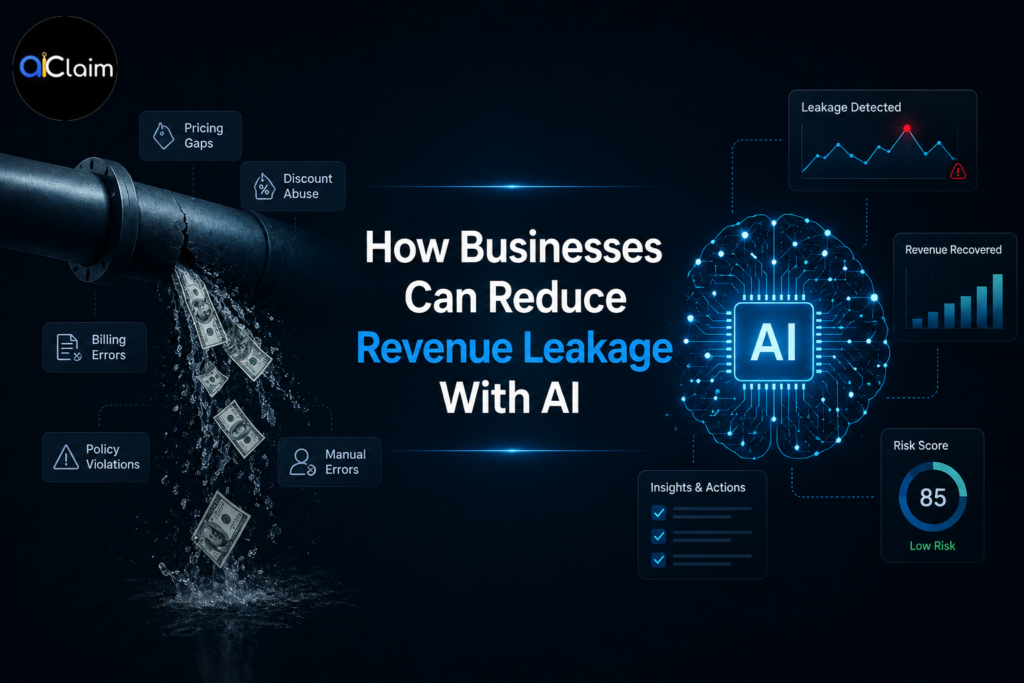
How Businesses Can Reduce Revenue Leakage With AI
Revenue leakage often does not come from one major mistake.
Instead, it usually happens through hundreds of small inefficiencies.
A missed documentation requirement.
A delayed follow-up.
An incorrect classification.
A repeated workflow error.
Over time, these small issues become significant financial losses.
AI identifies these patterns at scale.
By analyzing operational data, AI systems reveal where money is being lost and why.
Moreover, AI does not replace human expertise.
Instead, it gives teams better information to make faster and more accurate decisions.
Human experts can focus on complex cases while AI manages large-scale analysis.
This combination creates a more efficient and intelligent claims ecosystem.