
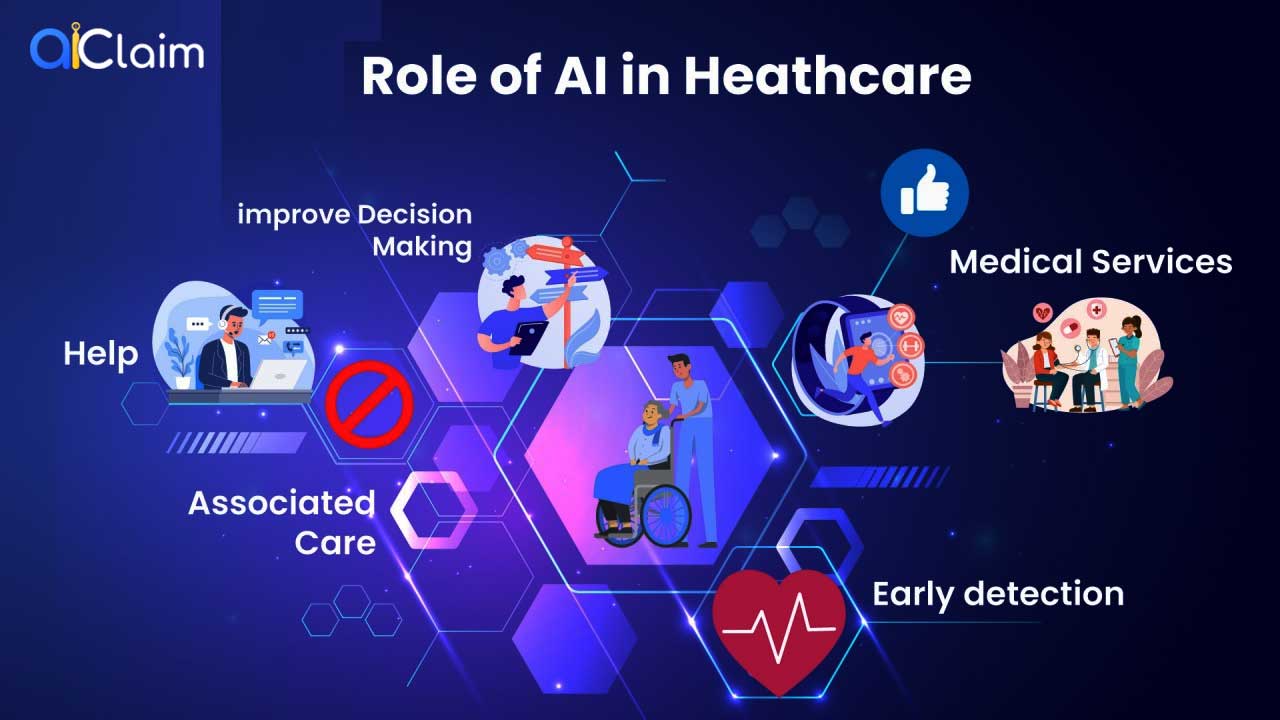

Healthcare revenue cycle teams are under pressure from every direction. Claim denials are increasing, payer requirements are changing, staffing remains difficult, and manual workflows continue to consume valuable hours. Consequently, healthcare organizations are looking beyond traditional revenue cycle management (RCM) software. They are adopting artificial intelligence (AI), machine learning, natural language processing (NLP), predictive analytics, and intelligent automation to identify revenue problems earlier and resolve them faster.
The shift is already measurable. Experian Health reports that 63% of providers now use AI somewhere in their revenue cycle, although only 15% have fully integrated AI into standard RCM operations. Additionally, 68% of providers say submitting clean claims has become more difficult than it was a year earlier.
At the same time, HFMA’s 2026 Revenue Cycle of the Future survey found that 27% of surveyed healthcare finance professionals are actively deploying AI at scale across multiple functions, while another 53% are running pilots in selected areas. Therefore, the real question is no longer whether healthcare organizations should explore AI. Instead, the important question is which AI-powered revenue cycle tools can solve the problems that are actually costing providers money.
What Are AI-Powered Healthcare Revenue Cycle Tools?
AI-powered RCM tools use technologies such as machine learning, predictive analytics, NLP, generative AI, and agentic AI to automate or improve revenue cycle decisions. Unlike traditional rules-based automation, AI can analyze large amounts of historical and real-time data, identify patterns, predict potential problems, and recommend or execute the next appropriate action.
For example, a conventional claims system may identify that a required field is missing. An AI-powered system can go further by analyzing previous claims, payer behavior, patient information, documentation, and payment outcomes to determine whether the claim is likely to be denied. That distinction is important because many revenue problems are discovered too late.
When a denial reaches the billing team, the organization has already spent time processing the claim. Staff must investigate the reason, communicate with the payer, correct documentation, submit an appeal or resubmission, and then wait again for reimbursement. AI changes the workflow from reactive revenue recovery to proactive revenue protection.

Why Healthcare Organizations Are Turning to AI for RCM
Revenue leakage rarely comes from one major problem. Instead, it often develops through hundreds or thousands of small issues across the patient financial journey. An incorrect insurance record can create a denial. A missed authorization can delay payment. An inaccurate code can reduce reimbursement. A documentation gap can trigger an audit. A delayed follow-up can allow an unpaid account to remain unresolved.
HFMA reported in January 2026 that hospitals can lose approximately 3% to 5% of net revenue annually through revenue leakage, including missed billing opportunities, inefficiencies, and underpayments. Furthermore, Experian Health reports that 25% of providers experienced increased denial rates over the previous 12 months, while more than four in ten providers reported that at least 10% of their claims were denied.
Therefore, AI-powered RCM tools are increasingly being applied to five critical areas: revenue cycle intelligence, patient access and eligibility, prior authorization, medical coding, and denial prevention and recovery.
1. Waystar AltitudeAI: Connecting Revenue Cycle Data With AI
Waystar is one of the prominent platforms moving toward an autonomous revenue cycle through its AltitudeAI technology. The major problem it addresses is fragmentation. Healthcare organizations frequently operate multiple systems for clinical documentation, authorization, claims, payments, denials, and financial reporting. Consequently, important information can become trapped between departments and applications.
Waystar announced in March 2026 that its expanded collaboration with Google Cloud combines its proprietary healthcare data with generative and agentic AI capabilities, including Google Gemini large language models. The company says its platform uses data from more than 7.5 billion annual transactions and learns from downstream payment outcomes to improve upstream functions such as coverage identification, prior authorization, and denial prevention.
How Waystar AltitudeAI Helps Solve the Problem
The value of this approach is its ability to connect information across the revenue cycle. For instance, payment outcomes can provide signals that improve future claim decisions. Similarly, historical payer behavior can help identify patterns associated with denials or payment problems. Waystar also introduced an AI capability in 2026 focused on identifying post-payment recoupments, which the company estimates represent more than $40 billion in provider payments reversed annually.
This demonstrates an important development in healthcare AI: organizations are no longer focusing exclusively on getting claims paid. They are also using AI to determine whether payments were correct and whether revenue was subsequently taken back.
Best Fit for Waystar AltitudeAI
This type of platform can be particularly valuable for large health systems that need broader connectivity across claims, payments, clinical information, authorization, and revenue operations. However, organizations should evaluate integration requirements carefully. AI delivers better results when the underlying data is accurate, connected, and available within the workflow.
2. Experian Health AI Advantage and Patient Access Curator
Experian Health provides AI-powered capabilities across patient access, eligibility, claims, and denial prevention. One of the biggest revenue cycle problems occurs before a claim is even created. If patient demographics are incorrect, insurance information is outdated, coordination of benefits is wrong, or eligibility is misunderstood, the claim can enter the billing workflow with a problem already embedded.
Experian Health’s research highlights the scale of this issue. Its 2025 State of Claims research found that 32% of claim denials were associated with incomplete or incorrect patient registration information.
How Patient Access Curator Addresses Front-End Errors
Patient Access Curator uses machine learning, automation, and data validation to verify and correct information such as eligibility, demographics, Medicare Beneficiary Identifier information, coordination of benefits, and insurance discovery. That matters because fixing an error at registration is usually more efficient than discovering the same error after claim submission.
The approach is essentially “prevent before processing.” Instead of asking billing staff to repeatedly investigate incorrect insurance records, AI can validate information earlier and feed corrections into the appropriate workflow.
How AI Advantage Helps Prevent Denials
Experian Health’s AI Advantage analyzes historical payment information and payer data to identify claims that may be at risk before submission. The system can continuously learn from patterns and outcomes, allowing organizations to improve their denial-prevention strategies over time.
This is especially useful for organizations that have large claim volumes but limited staff capacity. Rather than treating every claim identically, predictive AI can help teams focus attention where the financial risk is greatest.
3. AKASA: AI Automation for Repetitive RCM Work
AKASA focuses heavily on automating repetitive revenue cycle workflows. This addresses another major challenge: staff spend too much time performing administrative tasks that require consistency but not necessarily human judgment. Prior authorization is a good example. Revenue cycle teams may need to repeatedly access payer portals, check authorization status, interpret responses, document results, and update internal systems. As volumes increase, these tasks create queues and consume staff capacity.
How AKASA Uses AI for Prior Authorization
AKASA Auth Status uses AI-powered automation combined with revenue cycle expertise to check authorization status, interpret results, and document the information. This becomes particularly relevant as payer authorization requirements evolve. CMS’s interoperability and prior authorization rule introduced requirements designed to improve electronic data exchange and streamline prior authorization. Several operational provisions began taking effect in 2026, while broader API requirements have implementation dates extending into 2027.
Therefore, healthcare organizations need revenue cycle technology that can adapt as payer workflows and regulatory requirements change. AKASA also reports that a Montage Health implementation automated more than 80,000 claim-status activities over approximately one year, saving about 300 staff hours per month and reducing A/R days by 13%.
The broader lesson is straightforward: AI does not always need to make a complex clinical decision to create financial value. Automating repetitive administrative work can free experienced staff to focus on exceptions, escalations, and higher-value revenue opportunities.
4. CodaMetrix: AI-Powered Autonomous Medical Coding
CodaMetrix addresses one of the most important links between clinical documentation and reimbursement: medical coding. Coding is difficult because the information required to select appropriate codes can be distributed across clinical documentation. At the same time, coding rules, payer requirements, specialties, and documentation patterns can vary considerably.
Consequently, simple keyword matching is not enough.
How AI Medical Coding Improves Revenue Cycle Performance
CodaMetrix’s CMX CARE platform uses clinical context to support autonomous coding across specialties. The company was named No. 1 in the 2026 Best in KLAS category for Autonomous Medical Coding. The platform is designed to understand the broader clinical story rather than simply search for isolated terms. That distinction can help organizations address coding backlogs, staffing shortages, inconsistent workflows, and coding-related denials.
CodaMetrix reports that its customers can achieve more than 50% reductions in coding costs, more than 70% reductions in manual coding, and up to 60% lower coding-related denials.
Its reported customer results also demonstrate why organizations are exploring autonomous coding. For example, OHSU reported that 92% of radiology cases were coded autonomously and coding-related denials fell by 70% in the cited implementation.
However, responsible implementation remains important. Complex or unusual cases may still require experienced coders and quality assurance. The strongest model is therefore not necessarily “AI replaces coders.” Instead, it is AI handling appropriate cases while human experts manage exceptions and maintain oversight.

5. Aiclaim ClearClaim: AI-Powered Denial Prediction and Prevention
Another important category of AI-powered RCM technology is predictive denial management. Aiclaim approaches the problem through ClearClaim, an AI denial prediction engine designed to identify claims that may be at risk before submission. This addresses one of the most expensive weaknesses in traditional RCM: organizations often discover problems only after the payer rejects the claim.
How AI Denial Prediction Works
A predictive denial engine can evaluate multiple claim attributes, including payer information, coding patterns, patient data, authorization details, historical outcomes, and other available claim-level signals. The model then assigns a risk assessment and helps revenue cycle teams prioritize claims that need attention. Conceptually, the workflow changes from:
Claim submitted → denial received → staff investigates → correction → resubmission
to:
Claim prepared → AI evaluates risk → high-risk issue identified → staff corrects issue → cleaner claim submitted
That difference can reduce unnecessary rework while allowing staff to concentrate on claims where intervention can produce the greatest financial impact. ClearClaim supports X12 837 EDI and API integration, allowing organizations to incorporate denial prediction into existing claim workflows rather than treating AI as an isolated application.
For organizations looking for a focused starting point, denial prediction can be particularly attractive because it targets a measurable financial outcome: preventing avoidable denials before they become accounts receivable problems.
How Should Healthcare Organizations Choose an AI RCM Tool?
Healthcare organizations should first identify where they are losing revenue, not which AI vendor is most advanced. Then, they should choose an AI platform that addresses those specific problems. For example, eligibility errors can create large numbers of claim denials.
In that case, front-end AI may deliver the strongest return. Similarly, prior authorization can create operational bottlenecks.
Therefore, authorization automation may provide a more appropriate solution. If coding backlogs delay claims, autonomous coding could deliver greater value. Meanwhile, organizations experiencing widespread denial problems may benefit from predictive denial management.
Integration is equally important.
Even advanced AI cannot help if staff must manually transfer data between systems. The technology should fit into existing EHR, practice management, clearinghouse, billing, and claims workflows. Data governance also deserves attention. Experian Health reports that privacy and security are major AI adoption barriers. Accuracy and cost also concern providers.
Therefore, healthcare organizations should evaluate security, explainability, human oversight, integration, auditability, model performance, and measurable ROI before deployment.

What Is the Future of AI in Healthcare Revenue Cycle Management?
The direction is moving from isolated automation toward connected revenue cycle intelligence. The next generation of RCM will increasingly combine predictive AI, generative AI, agentic AI, workflow automation, and human expertise. For example, an AI system may identify a high-risk claim, determine the probable reason for the risk, retrieve supporting information, recommend a correction, route the task to the right employee, and then learn from the eventual payment outcome.
That is fundamentally different from simply automating a single administrative task. HFMA’s 2026 research reflects this movement. McKinsey estimates cited in the report suggest AI could potentially reduce cost to collect by 30% to 60%, while improving cash realization and shifting staff toward higher-value work.
Nevertheless, healthcare organizations should avoid treating AI as a magic solution. Poor data, weak workflows, insufficient governance, and poorly defined processes can limit even sophisticated technology. The strongest results will come from combining AI with clean data, experienced revenue cycle professionals, strong governance, and continuous performance measurement.
Frequently Asked Questions About AI-Powered Healthcare RCM Tools
What are AI-powered revenue cycle management tools?
AI-powered RCM tools use technologies such as machine learning, predictive analytics, NLP, generative AI, and intelligent automation to improve healthcare billing, coding, eligibility, prior authorization, claims, denial management, and payment workflows.
Can AI reduce healthcare claim denials?
Yes. AI can help reduce avoidable denials by identifying patterns associated with eligibility errors, coding problems, authorization issues, documentation gaps, and other claim risks before submission. However, actual results depend on data quality, workflow integration, payer mix, and implementation.
Which part of RCM benefits most from AI?
There is no universal answer. Experian Health’s 2026 research found that providers see eligibility and benefits verification, patient scheduling and access, and patient registration and data collection among the leading opportunities for AI.
Can AI replace healthcare revenue cycle employees?
AI is more likely to change revenue cycle roles than eliminate the need for human expertise. Routine work can increasingly be automated, while employees can focus on complex claims, exceptions, payer negotiations, compliance, appeals, and financial strategy.
Is AI safe for healthcare revenue cycle management?
AI can be used responsibly when organizations implement appropriate security, privacy, governance, audit controls, human oversight, and performance monitoring. Healthcare organizations should evaluate the vendor’s security and compliance practices before connecting sensitive data.
The Bottom Line: AI Is Moving RCM From Reactive to Predictive
The biggest opportunity in healthcare revenue cycle management is not simply processing claims faster. It is identifying financial risk before that risk becomes a denial, delayed payment, underpayment, or lost revenue. Waystar demonstrates how connected financial and clinical intelligence can support an autonomous revenue cycle. Experian Health focuses heavily on data accuracy, patient access, and denial prevention. AKASA targets repetitive administrative workflows and authorization work. CodaMetrix brings AI into medical coding. Meanwhile, Aiclaim ClearClaim focuses specifically on predicting and preventing claim denials before submission.
The right choice ultimately depends on the organization’s biggest revenue leakage point. For healthcare leaders, the most practical strategy is to start with one measurable problem, establish a baseline, deploy AI into the existing workflow, monitor outcomes, and expand only after proving value. That approach turns AI from an expensive technology experiment into a measurable revenue cycle improvement strategy.
Ready to Identify Hidden Denial Risk?
Healthcare organizations do not have to wait for a payer denial to discover a claim problem. Aiclaim’s ClearClaim helps revenue cycle teams identify potential denial risks before claims are submitted, giving staff an opportunity to correct issues earlier and protect revenue.
Get a free AI-powered claim risk assessment and discover where preventable denials may be affecting your revenue cycle.
Download the Healthcare AI RCM Readiness Checklist to evaluate your organization’s eligibility, coding, claims, denial management, prior authorization, and automation opportunities.
Explore AI-powered revenue cycle automation with Aiclaim.


