

In the ever-changing world of healthcare, accuracy in billing is more important than ever. For providers, hospitals, and medical practices, understanding technical terms in medical billing is the key to faster reimbursements and error-free claims. One such essential term is ICN in medical billing. But what exactly does it mean, and why does it matter for your practice?
Understanding ICN in Medical Billing
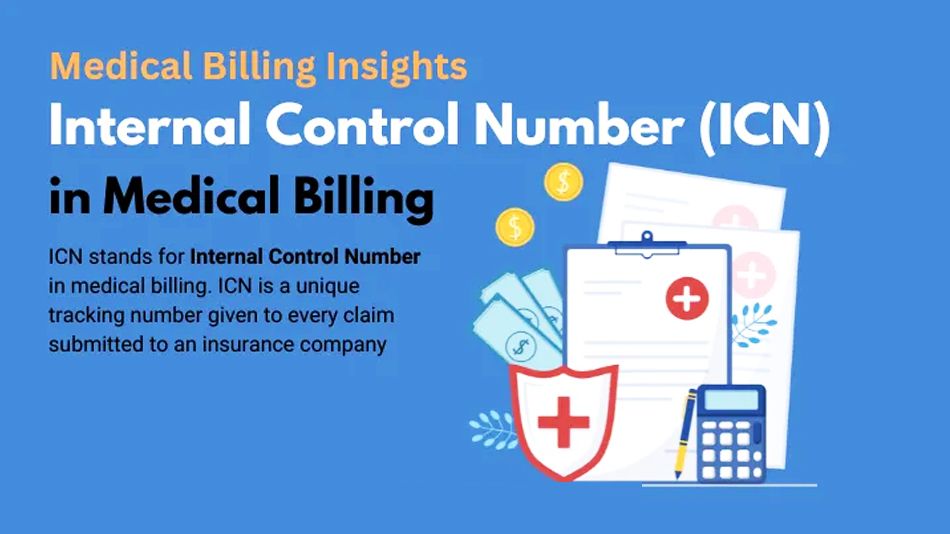
To begin with, ICN stands for Internal Control Number. It is a unique claim tracking number assigned by insurance companies, Medicare, or Medicaid when a healthcare claim is received. In some cases, it may also be called the Invoice Control Number or Claim Control Number.
Because every claim needs a reference, the ICN works like a digital fingerprint. As a result, it allows providers and payers to identify, monitor, and resolve claims without confusion.
Why is ICN Important in Medical Billing?
The ICN in medical billing plays a critical role in ensuring claims are not lost, duplicated, or delayed. Most importantly, it helps healthcare providers in:
- Tracking claim status – Instead of searching by patient details, payers can locate claims instantly with ICN.
- Managing re-submissions – If a claim is denied or needs correction, the ICN number ensures that the updated claim is linked properly.
- Processing appeals – During disputes, providers can use ICNs to reference the exact claim without error.
- Matching payments – When insurers release payments, ICNs help connect the payment to the original claim.
In short, without ICNs, the billing cycle would be prone to confusion and unnecessary delays.
How is an ICN Number Structured?
While formats may vary by payer, most ICN numbers in medical billing follow a logical structure. For example, the number often includes:
- Date of claim receipt – Helps identify when the claim entered the payer’s system.
- Claim type – Differentiates between original, adjusted, or voided claims.
- Sequence number – Provides a unique identifier for each claim.
Because of this standardized format, both providers and insurers can quickly decode information related to any claim.
ICN vs. Other Claim Identifiers
Many providers often confuse ICN with other claim identifiers such as DCN (Document Control Number) or claim reference numbers. However, there is a difference:
- ICN is generally used by Medicare and Medicaid.
- DCN is more commonly used by private insurance payers.
Yet, both serve the same purpose: making claim tracking easier and faster.
Best Practices for Using ICN in Medical Billing
Since ICNs directly impact the accuracy and speed of claim management, following best practices is essential. Therefore:
- Always note down ICNs when submitting or following up on claims.
- Use ICNs for resubmissions instead of patient details to avoid mismatches.
- Leverage RCM solutions like Aiclaim’s AI-powered claim automation to ensure claims are tracked accurately.
- Train billing teams to reference ICNs during appeals and corrections.
By adopting these practices, providers can significantly improve revenue cycle efficiency.
The Role of AI in Managing ICNs
With the rise of AI in healthcare billing, tracking ICNs has become more efficient than ever. At Aiclaim, we use advanced AI-driven solutions to:
- Automatically capture ICNs for every claim
- Reduce manual errors in claim resubmission
- Provide real-time updates on claim status
- Streamline communication between providers and payers
As a result, healthcare providers not only save time but also recover revenue faster.
???? Learn more about how AI can optimize your practice’s financial health: Book a consultation today.
Frequently Asked Questions (FAQs) About ICN in Medical Billing
Q1. What does ICN stand for in medical billing?
ICN stands for Internal Control Number, a unique identifier assigned to every healthcare claim.
Q2. Where can I find the ICN on a claim?
The ICN is usually visible on the Explanation of Benefits (EOB) or the electronic remittance advice from the payer.
Q3. Is ICN the same as DCN?
Not exactly. ICN is mostly used by Medicare and Medicaid, while DCN (Document Control Number) is used by private insurers. Both serve as claim identifiers.
Q4. Why is ICN important for appeals?
Because ICNs directly identify claims, they ensure that corrections, disputes, or appeals are linked to the right submission.
Q5. How does AI help in managing ICNs?
AI automates claim tracking, reduces manual entry errors, and provides real-time claim visibility, making ICN management faster and more accurate.
Final Thoughts
The ICN in medical billing may look like just another number, but in reality, it is the backbone of claim tracking and revenue management. Since every dollar counts in healthcare, understanding and using ICNs effectively ensures fewer denials, quicker payments, and stronger compliance.
With AI-powered solutions from Aiclaim, providers can go beyond manual claim tracking. Instead, they can embrace automation, gain real-time insights, and focus on what truly matters—delivering quality patient care while keeping revenue cycles healthy.
???? Ready to transform your claim management? Schedule a free consultation with Aiclaim today.