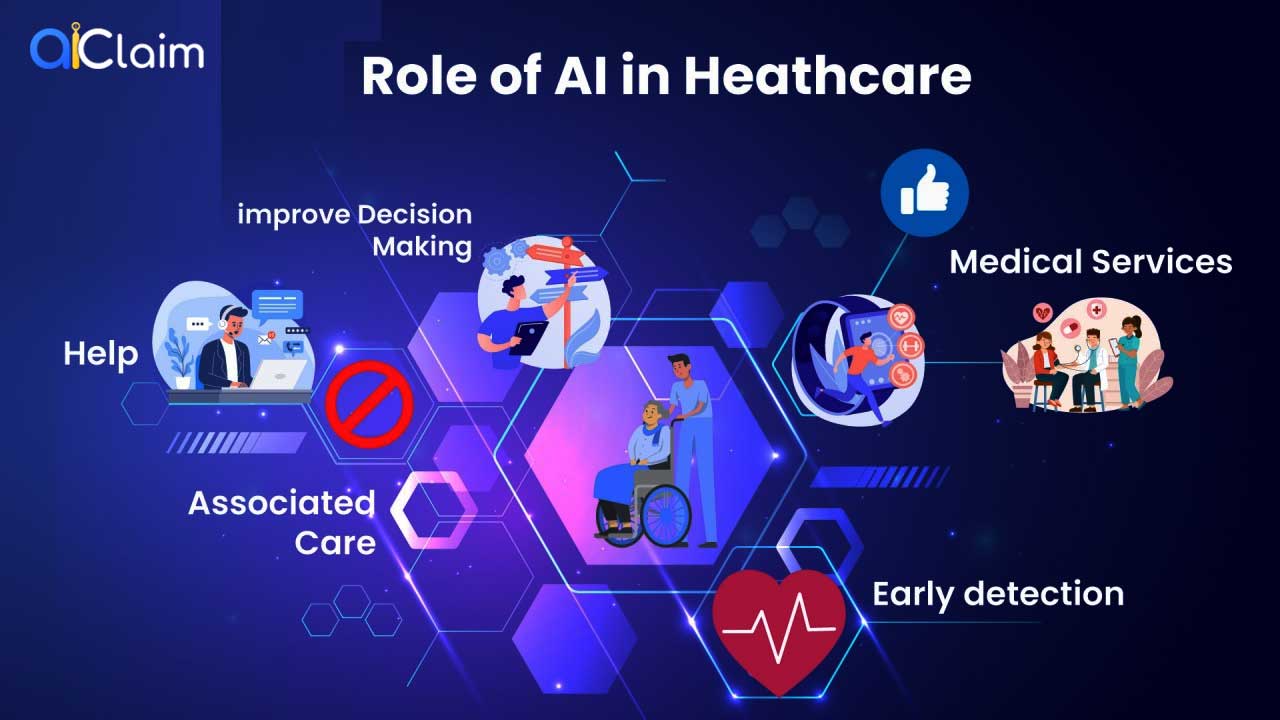

How AI is Revolutionizing Revenue Cycle Management in Healthcare

Healthcare organizations are losing revenue in places that are often difficult to see. These hidden losses can significantly impact financial performance. Preventable claim denials reduce revenue. Inaccurate patient information creates billing errors. Coding inconsistencies can delay or reject claims. Delayed prior authorizations also create revenue gaps. Eligibility errors can lead to unnecessary claim rework. Unpaid claims further increase financial pressure.
Meanwhile, slow accounts receivable follow-up can delay payments. Together, these issues create significant revenue leakage across the healthcare revenue cycle. Consequently, improving revenue cycle management (RCM) requires more than simply processing additional claims. It is about identifying financial risk earlier and taking the right action before that risk becomes lost revenue.
That is where AI in revenue cycle management is becoming increasingly important.
Instead of relying entirely on manual review and rules-based workflows, AI-powered RCM can analyze large volumes of clinical, financial, payer, and claims data to identify patterns that humans may overlook. More importantly, modern AI models can help organizations move from reactive revenue recovery to proactive revenue protection.
The opportunity is significant. CMS estimates that the FY2025 Medicare Fee-for-Service improper payment rate was 6.55%, representing approximately $28.83 billion in improper payments. Although improper payments are not synonymous with claim denials or provider revenue loss, the figure demonstrates the financial impact associated with documentation, coding, coverage, and payment accuracy across the healthcare system.
At the same time, healthcare administrative processes continue to consume substantial staff resources. The 2024 CAQH Index reported that healthcare automation could avoid approximately $222 billion in annual administrative costs, while moving remaining manual transactions toward fully electronic workflows could unlock another $20 billion in savings.
Therefore, AI is not simply another technology upgrade for healthcare organizations. It is becoming a strategic tool for protecting revenue, improving operational efficiency, and creating a more predictable RCM process.
Why Traditional Revenue Cycle Management Is Struggling
Traditional RCM processes depend heavily on people moving information between EHRs, practice management systems, payer portals, clearinghouses, spreadsheets, emails, and other systems. Although these processes can work, they become increasingly difficult to manage as claim volumes grow. A single patient encounter can generate eligibility checks, authorization requirements, coding decisions, documentation reviews, claim creation, submission, payer responses, payment posting, denial management, and follow-up activities.
Consequently, even a small error at the beginning of the revenue cycle can create problems several steps later. For example, an eligibility error may lead to an avoidable claim rejection. A missing authorization can turn into a denial. An incorrect modifier can delay payment. Meanwhile, a claim that is not followed up at the right time can remain unresolved in accounts receivable. The biggest problem, therefore, is not always the lack of effort. It is the lack of early visibility.

How AI Changes the Healthcare Revenue Cycle
AI changes RCM by continuously analyzing information and identifying patterns before financial problems become expensive to resolve. A conventional system might tell a billing employee that a claim has been denied. An AI-powered system can potentially identify that the claim has a high probability of denial before submission. That distinction is critical.
The first approach is reactive because the organization is fixing a problem after it occurs. The second is proactive because the organization is attempting to prevent the problem before the payer receives the claim. This shift can be applied across eligibility verification, coding, claim scrubbing, authorization, denial management, payment prediction, and accounts receivable.
AI-Powered Eligibility Verification Reduces Preventable Errors
Patient eligibility verification is one of the earliest financial checkpoints in the RCM process. However, manually verifying eligibility can become difficult when staff members have to work across multiple payer systems and deal with constantly changing coverage information. AI can help analyze eligibility responses, patient demographics, payer information, historical transactions, and coverage patterns.
For example, an AI model can identify discrepancies between the patient’s current information and historical records. It can also flag unusual coverage patterns for additional review. As a result, staff can concentrate on exceptions rather than manually reviewing every transaction. The objective is not simply faster verification.
The real objective is better verification before services become unpaid claims.
AI Is Transforming Medical Coding and Claim Accuracy
Medical coding directly influences reimbursement, compliance, and claim accuracy. However, coding workflows can become complicated because healthcare organizations must manage ICD-10-CM, CPT, HCPCS, modifiers, payer-specific requirements, documentation, and constantly evolving coding rules. AI can assist by analyzing clinical documentation and identifying potential coding inconsistencies.
Natural language processing can extract relevant information from unstructured clinical notes, while machine-learning models can compare documentation patterns with coding requirements. Importantly, AI should not be treated as an unrestricted replacement for qualified coding professionals. Instead, the strongest approach is often AI-assisted coding with human validation.
The AI identifies potential issues. The coding professional makes the final determination. Consequently, organizations can increase review efficiency while maintaining appropriate human oversight.
AI-Powered Claim Prediction Can Prevent Denials Before Submission
Denial prevention is arguably one of the most valuable applications of AI in RCM. Traditional claim management often focuses on identifying why a claim failed after the payer has already rejected it. AI enables a different approach.
A denial prediction model can evaluate historical claims, payer behavior, diagnosis and procedure combinations, provider information, authorization status, patient eligibility, coding patterns, documentation indicators, and previous denial outcomes. The model can then assign a risk score to a new claim. For example:
Claim A: Low predicted denial risk → proceed to submission.
Claim B: High predicted denial risk → route for additional review.
This creates an intelligent checkpoint between claim creation and claim submission. Over time, the model can learn from new claim outcomes, creating a continuous feedback loop.
How an AI Denial Prediction Model Works
A practical AI-based denial prediction architecture can follow this sequence:
Data ingestion → Feature extraction → Risk scoring → Explainable denial reasons → Human review → Claim correction → Submission → Payer outcome → Model feedback
The important component is the feedback loop. When the payer ultimately approves or denies a claim, that outcome becomes additional training data. Therefore, the system can continuously improve its understanding of payer-specific patterns. This is significantly different from a static rules engine that only follows predefined conditions.
AI Makes Denial Management More Proactive
Denials are expensive because they consume staff time after the revenue opportunity has already been disrupted. Furthermore, not every denial should receive the same level of attention. AI can classify denials based on factors such as financial value, probability of successful appeal, payer behavior, aging, root cause, and urgency. Consequently, RCM teams can prioritize high-value and high-probability opportunities instead of treating every denial equally.
For example, an AI system may identify a high-dollar denial with strong appeal potential and route it immediately to an appropriate specialist. Meanwhile, low-value or low-probability cases can follow a different workflow. This creates a more intelligent denial work queue.

AI Can Improve Prior Authorization Workflows
Prior authorization remains another major source of administrative friction. According to the AMA’s recent physician survey, physicians reported completing an average of 39 prior authorization requests per week, while physicians and staff spent approximately 13 hours per week handling them. Furthermore, the AMA reported that 75% of physicians said prior authorization denials had increased over the previous five years.
Therefore, automating authorization workflows can have financial and operational benefits. AI can help identify whether authorization may be required, determine documentation requirements, organize supporting information, and route incomplete requests for review. Meanwhile, CMS is pushing the healthcare industry toward greater interoperability. Its 2024 interoperability and prior authorization rule requires certain impacted payers to implement APIs for electronic prior authorization and data exchange, with major API compliance requirements primarily beginning in 2027.
In addition, CMS released a 2026 proposed rule that would extend electronic prior authorization requirements to additional drug-related workflows and further advance FHIR-based interoperability. This makes AI-enabled authorization workflows increasingly relevant to healthcare organizations preparing for a more connected RCM environment.
AI Improves Accounts Receivable and Payment Forecasting
Accounts receivable management is another area where AI can provide substantial value. Instead of simply displaying outstanding balances, AI can analyze claim age, payer behavior, historical payment patterns, denial history, patient responsibility, claim status, and other variables to predict which accounts are most likely to resolve quickly and which require intervention. For instance, a system could identify an aging claim that has a high probability of payment if followed up immediately.
Consequently, the billing team can prioritize its workload based on expected financial impact rather than simply working claims chronologically. This creates a more strategic approach to AR management and payment optimization.
AI Connects the Entire Revenue Cycle
The real transformation happens when AI is not used as an isolated tool. Eligibility, coding, authorization, claims, denials, payments, and AR should ideally operate as connected parts of one revenue intelligence ecosystem. For example, if an organization discovers that a particular payer frequently denies a specific procedure because of missing documentation, that insight should not remain inside the denial management department.
Instead, the information should flow backward. The coding workflow can be updated. The authorization workflow can be updated. The pre-submission claim check can be updated. The result is a continuous improvement cycle:
Identify → Predict → Prevent → Submit → Learn → Optimize.
That is where AI-powered RCM can move beyond automation and become a genuine revenue intelligence system.

What Healthcare Organizations Should Look for in an AI RCM Platform
Not every product described as “AI-powered” provides meaningful intelligence. Healthcare organizations should look beyond automation claims and evaluate whether the technology can explain its recommendations, integrate with existing workflows, learn from outcomes, protect sensitive healthcare data, and provide measurable business results.
A strong AI RCM platform should ideally support interoperability, human review, explainable risk scoring, payer-specific intelligence, workflow automation, analytics, and continuous model improvement. Most importantly, healthcare leaders should measure outcomes rather than AI activity.
The relevant question is not how many claims the AI processed. The better question is:
How much preventable revenue did the technology help protect?
The Future of AI in Revenue Cycle Management
The next generation of healthcare RCM will increasingly combine artificial intelligence, machine learning, natural language processing, predictive analytics, automation, APIs, and human expertise. However, the goal should not be to remove humans from the revenue cycle.
Instead, the goal should be to remove unnecessary manual work so experienced professionals can focus on exceptions, complex claims, compliance, payer disputes, and decisions requiring judgment. Furthermore, AI systems will increasingly move from prediction toward intelligent action.
A future RCM workflow could identify a claim risk, explain the likely problem, recommend the correction, route the task to the right employee, monitor the payer response, and use the final outcome to improve future predictions. That creates a much more resilient revenue cycle.
How Aiclaim Helps Organizations Move Toward AI-Powered RCM
For healthcare organizations struggling with preventable denials, inefficient claim workflows, and limited visibility into claim risk, AI can provide an opportunity to intervene earlier. Aiclaim’s AI-driven approach focuses on revenue cycle automation, claims management, denial management, medical billing, revenue integrity, and operational efficiency.
Its ClearClaim solution is designed around the concept of predicting and preventing claim denials before submission, allowing organizations to identify potential claim risks before those risks become costly rework. The practical advantage is straightforward: instead of waiting for the payer to explain what went wrong, healthcare organizations can use predictive intelligence to identify potential problems earlier.
Want to see where AI could reduce preventable claim risk in your revenue cycle? Start with a claim-risk assessment and identify the workflows that offer the greatest opportunity for automation and revenue protection.
Frequently Asked Questions About AI in Revenue Cycle Management
What is AI in revenue cycle management?
AI in revenue cycle management refers to using artificial intelligence, machine learning, natural language processing, and predictive analytics to automate and optimize healthcare financial workflows such as eligibility verification, coding, claims processing, denial prevention, prior authorization, payment prediction, and accounts receivable management.
How does AI reduce healthcare claim denials?
AI can analyze historical claims and identify patterns associated with denials. Before submission, a predictive model can evaluate a claim’s characteristics and flag potential problems so staff can correct them before the claim reaches the payer.
Can AI completely replace medical billing staff?
No. The strongest implementation typically combines AI automation with human oversight. AI can handle repetitive analysis and workflow tasks, while experienced professionals manage complex cases, exceptions, compliance decisions, and payer interactions.
How does AI improve revenue cycle efficiency?
AI improves efficiency by prioritizing work, automating repetitive processes, detecting errors earlier, predicting claim outcomes, identifying denial risks, and directing staff toward the cases that require human intervention.
Is AI-powered RCM suitable for small medical practices?
Yes. Small practices can benefit from AI because they often have limited billing resources. Automating eligibility, claim checks, denial risk detection, and follow-up prioritization can allow smaller teams to manage revenue cycle activities more efficiently.
What is the future of AI in healthcare revenue cycle management?
The future is moving toward predictive and increasingly autonomous RCM workflows. Instead of simply automating existing tasks, AI will increasingly predict financial risk, recommend actions, coordinate workflows, and continuously learn from claim and payment outcomes.
Final Takeaway
AI is changing revenue cycle management by shifting healthcare organizations from reactive revenue recovery to proactive revenue protection.
Instead of discovering problems after claims are denied, organizations can increasingly identify risk before submission. and manually treating every account equally, teams can prioritize work according to financial impact and predicted outcomes. Instead of operating isolated billing departments, healthcare organizations can build connected revenue intelligence workflows.
Most importantly, successful AI adoption is not about adding another technology layer. It is about solving real revenue problems. When AI is applied thoughtfully to eligibility, coding, authorization, claims, denial prevention, payment optimization, and AR management, healthcare organizations can create a revenue cycle that is faster, more intelligent, more predictable, and better prepared for the increasingly digital healthcare environment.
The future of RCM is not simply automated billing. It is intelligent revenue protection.